Medically reviewed by Dr. Aditi Jain, BDS, MDS · Periodontist & Oral Implantologist · with 15 years of experience·Last reviewed 11 June 2026
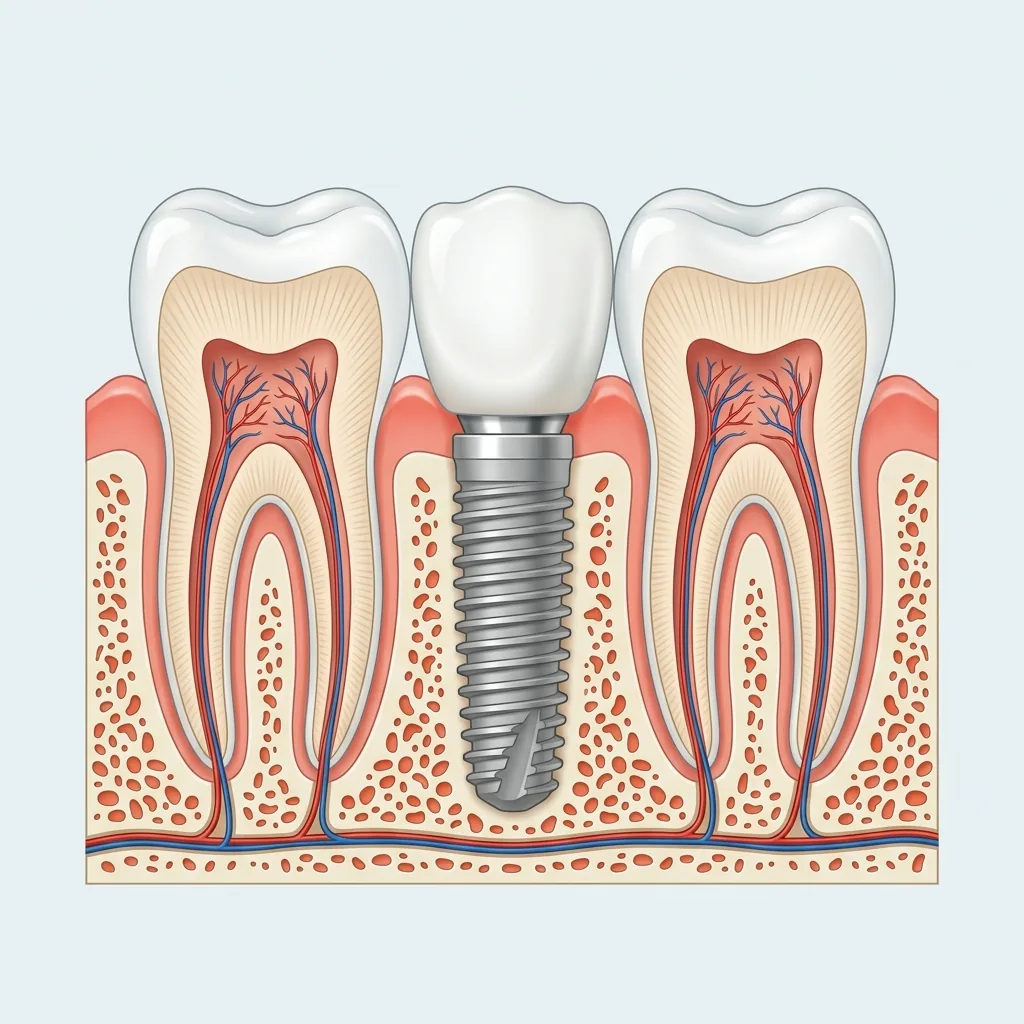
Single tooth replacement is a procedure that fills the gap left by one missing tooth with a small titanium dental implant placed in the jaw, topped with a ceramic crown that looks and works like a natural tooth. At Surekha Dental Clinic in Mulund West, Mumbai, single tooth replacement is carried out under local anaesthetic across two short stages, so you should feel little to no pain during the procedure. It suits anyone who has lost a single tooth to decay, injury or extraction and wants a fixed replacement that does not rely on grinding down the healthy teeth beside it. An implant also helps protect the bone and keeps neighbouring teeth from drifting into the gap. If you are missing a tooth, our friendly team is here to talk you through whether an implant is right for you.
Why should you not delay replacing a missing tooth?
A gap rarely stays just a gap. Leaving a missing tooth unreplaced can quietly affect the teeth and bone around it, so it is worth acting before any of the following set in.
The teeth on either side of the gap begin to tilt or drift, which can throw off your bite
The opposing tooth above or below the gap starts to over-erupt because nothing meets it
The jawbone where the tooth used to be slowly shrinks once it no longer carries chewing forces
Chewing on one side only, which puts extra strain on the rest of your teeth
Food traps repeatedly in the gap, making that area harder to keep clean
A change in your speech or a noticeable space when you smile or talk
Step by step
Here is exactly what happens during your single tooth replacement, step by step.
1Step 1 of 2
How does the dentist place the implant in the jaw?
Your single tooth replacement starts by making the area completely comfortable and placing the implant that will anchor your new tooth. A small injection of local anaesthetic numbs the gum and bone around the gap, so you should feel little to no pain, just gentle pressure. The dentist makes a small incision over the gap to expose the bone, then prepares a socket with a series of fine drills, each a little wider than the last. A single titanium implant, which acts as the new tooth root, is threaded gently into this socket, and a healing cap and a few stitches are placed. The implant is then left to fuse with the bone over the next few months, and this quiet healing is what gives your new tooth its strength.
2Step 2 of 2
How is the new crown fitted onto the implant?
Once the implant has fused firmly with the bone, the gap is ready to be filled with a natural-looking tooth. At this second stage the dentist removes the small healing cap and fits a connector called an abutment onto the top of the implant. A single ceramic crown, colour-matched to the teeth around it, is then cemented onto the abutment to fill the gap. The crown is shaped and checked so it meets your other teeth comfortably when you bite, and most people find it feels much like a natural tooth. A well-cared-for implant crown typically lasts ten to fifteen years with good care. The team will then show you how to keep it clean so it stays healthy.
Frequently asked questions about single tooth replacement
Does single tooth replacement hurt?
No, single tooth replacement is not the painful experience many people fear. Both the implant and the crown stages are carried out under local anaesthetic, so you should feel little to no pain during the procedure, just gentle pressure. Most people manage the days afterwards with simple painkillers and the aftercare advice we give you.
How long does the whole treatment take?
Single tooth replacement is spread over a few months, because the implant needs time to fuse with the bone before the crown goes on. The implant is placed in one short sitting, then left to heal, after which the crown is fitted at a second sitting. The dentist will give you a clear timeline after examining your jaw.
How long do dental implants last?
A well-cared-for dental implant and its ceramic crown typically last ten to fifteen years with good care. Brushing, flossing around the crown and regular check-ups at Surekha Dental Clinic all help it last. Most patients keep their implant healthy for many years when they look after it well.
Is an implant or a bridge right for me?
It depends on your jawbone, your general health, the neighbouring teeth and what you want to spend. An implant replaces a single tooth without grinding down the teeth beside it, while a bridge uses those teeth for support. After a short examination, the team at Surekha Dental Clinic will explain which option suits your gap.
How much does single tooth replacement cost in Mulund West?
The cost depends on the type of implant and crown used, whether any bone grafting is needed first, and the position of the missing tooth. There is no single fixed price. Please call Surekha Dental Clinic on +91 98334 88847 or use the booking form, and a written cost is provided after a short examination, with no obligation to proceed.
Will the new tooth look natural?
Yes. The crown that tops the implant is made of ceramic and colour-matched to the teeth around it, so it blends in when you smile. It is shaped to meet your other teeth comfortably when you bite, and most people find it looks and works much like a natural tooth once it is in place.