Medically reviewed by Dr. Aditi Jain, BDS, MDS · Periodontist & Oral Implantologist · with 15 years of experience·Last reviewed 11 June 2026
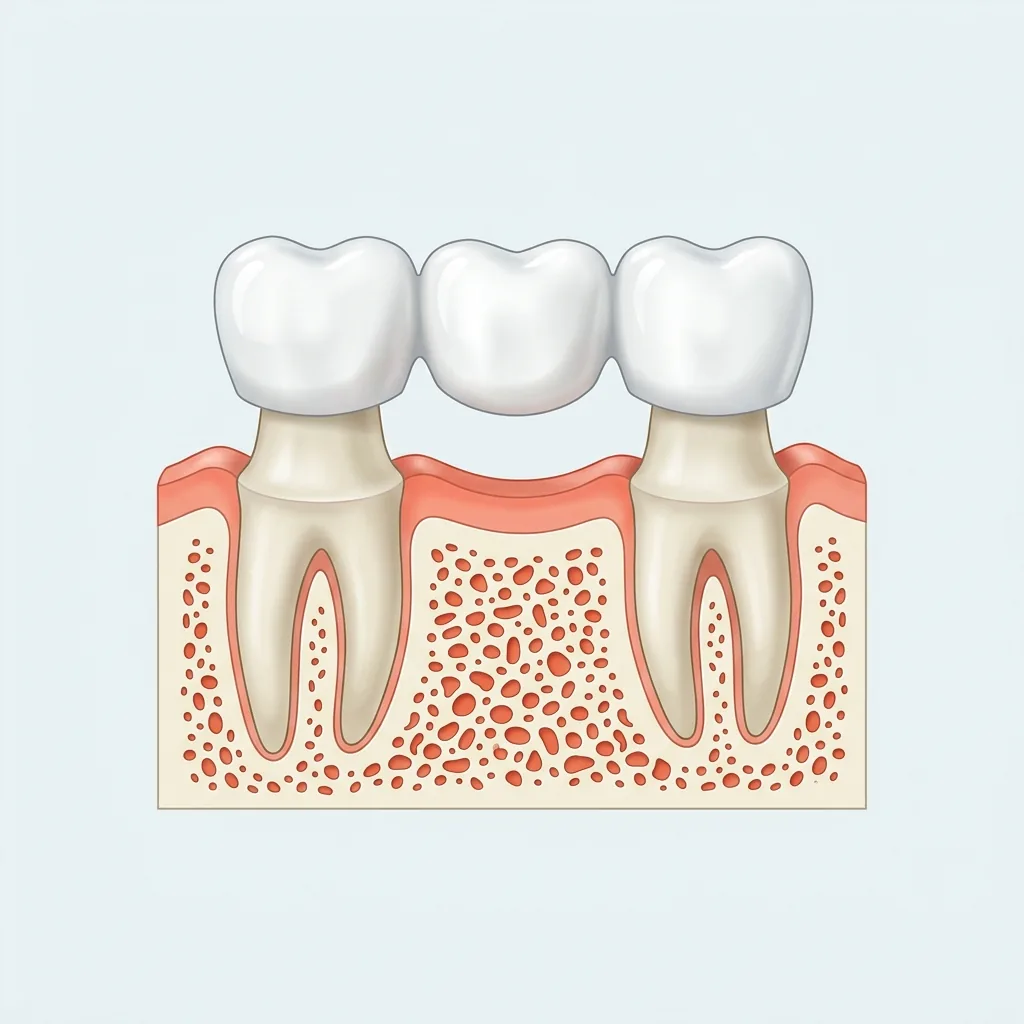
A fixed dental bridge is a row of joined crowns that fills the gap left by a missing tooth by anchoring to the healthy teeth on either side, so the bridge stays put and you do not have to take it out. At Surekha Dental Clinic in Mulund West, Mumbai, a fixed bridge (also called a tooth bridge) is fitted over a couple of comfortable sittings under local anaesthetic, and the replacement tooth is colour-matched to blend with your smile. A bridge suits anyone missing one tooth, or a few teeth in a row, who has strong neighbouring teeth to support it and would rather have something fixed than removable. If a gap is making it harder to chew or you do not like how it looks, our friendly team is here to talk you through whether a bridge is right for you.
Why should you not leave a missing tooth gap untreated?
A gap is not only about how your smile looks. Leaving a missing tooth unreplaced can slowly affect the teeth and bite around it, so it is worth acting before small problems grow.
Nearby teeth start to tilt or drift into the empty space, which can throw off your bite
The tooth above or below the gap can slowly over-erupt, growing into the space left behind
Chewing on one side because the gap is uncomfortable, which strains the other teeth
Food trapping in the gap, making that area harder to keep clean
Changes to how clearly you speak, as front gaps can affect certain sounds
Feeling self-conscious about a visible space when you smile or laugh
Step by step
Here is exactly what happens during your dental bridge, step by step.
1Step 1 of 3
How are the supporting teeth prepared for a bridge?
Your dental bridge at Surekha Dental Clinic starts with making the area comfortable and getting the supporting teeth ready. A small injection of local anaesthetic is given so the teeth and gum feel numb, and you should feel little to no pain, just gentle pressure. The two healthy teeth on either side of the gap, called the abutment teeth, are the anchors that will hold the bridge. Using a fine diamond bur, the dentist reshapes each of these into a slightly tapered form, removing a thin layer so the crowns can slip neatly over them. Shaping both teeth evenly is what lets the finished bridge sit snugly and share the chewing load. Once the abutment teeth are ready, the next step is to capture their exact shape for the lab.
2Step 2 of 3
How is the bridge fitted and checked before it is fixed?
With the abutment teeth shaped, the dentist captures their exact form so the lab can build a bridge that fits you precisely. A thin retraction cord is gently tucked at the gum line to expose the edges of the prepared teeth, then a detailed impression or digital scan is taken and sent to the lab. While your bridge is made, a temporary bridge is usually fitted so the gap is covered and you can eat and smile in between sittings. When the finished bridge comes back, it is tried on to check the fit, the bite and the shade, so it lines up and colour-matches the teeth around it. Getting these details right makes the bridge look natural, and once it checks out it is ready to be fixed.
3Step 3 of 3
How is the finished bridge fixed in place?
Once the fit, bite and shade are confirmed, the dentist fixes the bridge firmly onto the abutment teeth. The prepared teeth are cleaned and dried, a layer of bonding cement is placed inside the crowns, and the bridge is seated over both anchor teeth. Any extra cement is wiped away, and a final bite check makes sure your teeth meet evenly when you close. The replacement tooth now bridges the gap, restoring your ability to chew on that side, and because the bridge is fixed you do not need to take it out. A well-cared-for dental bridge typically lasts around ten to fifteen years, and the team will show you how to clean under and around it. Before you leave, you will get simple aftercare advice for your new bridge.
Frequently asked questions about dental bridge
Does getting a dental bridge hurt?
No, fitting a dental bridge is not a painful experience for most people. The supporting teeth are prepared under local anaesthetic, so you should feel little to no pain, just mild pressure. Afterwards the teeth may feel a little sensitive for a few days, which usually settles on its own.
How long does a dental bridge last?
A well-cared-for dental bridge typically lasts around ten to fifteen years. How long it lasts depends on keeping the supporting teeth and gums healthy. Brushing well, cleaning under the bridge daily and regular check-ups at Surekha Dental Clinic all help your bridge last as long as possible.
How long does the whole bridge treatment take?
A fixed bridge is usually completed over a couple of sittings spaced about one to two weeks apart, while the lab makes your custom bridge. A temporary bridge covers the gap in between. After examining your teeth, the dentist at Surekha Dental Clinic will tell you how many sittings yours is likely to need.
Is a dental bridge or an implant better for me?
It depends on your gap, your jawbone and the health of the neighbouring teeth. A bridge uses the teeth either side for support and is often quicker, while an implant stands on its own without touching them. Both are good options, and the team at Surekha Dental Clinic can examine you and advise which suits you.
How much does a dental bridge cost in Mumbai?
The cost of a bridge depends on how many teeth are being replaced, the material chosen and the condition of the supporting teeth. For a clear estimate for your situation, please call Surekha Dental Clinic on +91 98334 88847 or use the booking form. A written cost is provided after a short examination, with no obligation to proceed.
How do I clean and care for a dental bridge?
Brush twice a day as usual, and clean under the bridge daily using a floss threader or an interdental brush to keep the gum and supporting teeth healthy. Avoid very hard or sticky foods on the bridge at first. The team at Surekha Dental Clinic will show you the right cleaning technique before you leave.