Medically reviewed by Dr. Aditi Jain, BDS, MDS · Periodontist & Oral Implantologist · with 15 years of experience·Last reviewed 11 June 2026
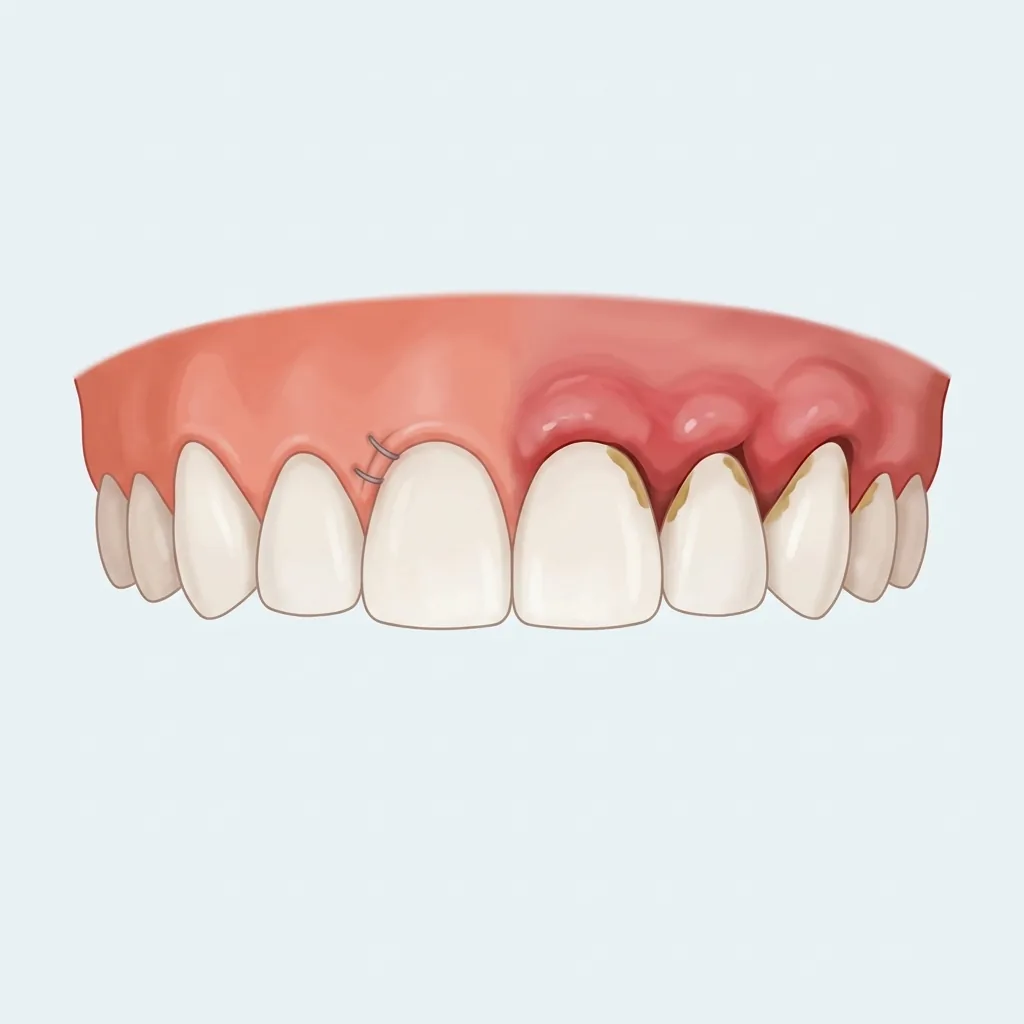
Pocket reduction surgery is a gum procedure that cleans infection out of the deep pockets which form between the gum and the tooth in advanced gum disease. Once the root surface and bone are clean, the gum is settled back at a lower, tighter level so the pockets shrink. At Surekha Dental Clinic in Mulund West, Mumbai, this surgery is led by periodontist Dr. Aditi Jain and carried out under local anaesthetic, so you should feel little to no pain. It suits people whose gum pockets have grown too deep for a normal scaling to clean, and where the infection has started to affect the bone holding the teeth. If your gums have been bleeding, swollen or pulling away from your teeth, our friendly team is here to help you protect them.
Advanced gum disease often builds quietly, so it helps to act early. See a dentist if any of the following do not settle, as treating deep pockets sooner usually protects more of the bone around your teeth.
Gums that bleed easily when you brush, floss or eat, even gently
Gums that look red, puffy or have started to pull away from the teeth
Ongoing bad breath or a bad taste that does not clear after brushing
Teeth that feel loose or have shifted, or new gaps opening up between them
Teeth that look longer than before, with more of the root on show as the gums recede
Deep gum pockets that a previous deep cleaning has not been able to settle
Step by step
Here is exactly what happens during your pocket reduction surgery, step by step.
1Step 1 of 3
How does the dentist numb the gum and open the pocket?
Your pocket reduction surgery at Surekha Dental Clinic begins by making the whole area completely comfortable. A local anaesthetic is given around the affected teeth, which blocks the nerve signals from that part of the gum, so you should feel little to no pain, only some gentle pressure. Most people just notice their lip and that side of the gum feeling heavy. Once you are fully numb, the periodontist uses a small surgical blade to outline a neat flap along the gum line beside the deep pockets. Opening the gum this way is what makes it possible to reach right down into the pocket, where a normal scaling simply cannot clean, so the infection on the root can be cleared properly in the next step.
2Step 2 of 3
How are the deep pocket and the bone cleaned and reshaped?
With the area numb, the periodontist gently lifts the gum flap with a thin elevator to expose the deep pocket and the root surface hidden inside it. The roots are then cleaned thoroughly with fine hand instruments called curettes and an ultrasonic scaler, which lift away the hardened tartar and infected deposits where bacteria have been collecting. Any irregular bone around the tooth is carefully reshaped to a smooth contour, so there are no rough ledges left for plaque to gather in. This deep cleaning is the step that clears the infection driving your gum disease, giving the gum a clean, smooth surface to heal against. You should feel only mild pressure and movement throughout, nothing sharp.
3Step 3 of 3
How is the gum repositioned to reduce the pocket?
Once the root and bone are clean and smooth, the final step is to settle the gum back so the pocket no longer stays deep. The periodontist repositions the gum flap slightly lower around the tooth, snug against the cleaned root, which is what reduces the pocket depth so it becomes much easier for you to keep clean at home. A few fine sutures (small stitches) then hold the gum securely in its new position while it heals. Bringing the gum down this way is designed to leave you with shallower, healthier pockets and firmer gums around the tooth. The area may feel a little tender for a few days, which is normal, and the team will give you clear aftercare advice before you leave.
Frequently asked questions about pocket reduction surgery
Is pocket reduction surgery painful?
No, pocket reduction surgery is not the painful experience many people fear. It is carried out under local anaesthetic, so you should feel little to no pain, just mild pressure. Some tenderness and swelling for a few days afterwards is normal and settles with simple aftercare and any painkillers we advise.
How much does pocket reduction surgery cost in Mumbai?
The cost depends on how many teeth are affected, how deep the pockets are, and whether bone reshaping or a graft is needed, so there is no single fixed price. Please call Surekha Dental Clinic on +91 98334 88847 or use the booking form. A written cost is provided after a short examination, with no obligation to proceed.
How long does it take to recover after gum surgery?
Most patients are back to their normal routine within a few days. Mild soreness and some swelling are common at first and settle steadily with rest, soft foods and the aftercare advice from Surekha Dental Clinic. Any non-dissolving stitches are usually removed at a short follow-up sitting about a week later.
Will pocket reduction surgery save my teeth?
Pocket reduction surgery is designed to control the infection in deep gum pockets and protect the bone that holds your teeth, giving them a better chance of staying firm. It does not regrow lost bone, but most patients find their gums become healthier and easier to keep clean. Good daily care and regular check-ups help the result last.
Who is pocket reduction surgery suitable for?
It suits people with advanced gum disease where the pockets are too deep for scaling alone to manage, especially once the infection has started to affect the bone. After examining your gums and measuring the pockets, periodontist Dr. Aditi Jain, BDS, MDS will tell you whether this surgery is the right step for you.
What can I eat after pocket reduction surgery?
Wait until the numbness from the anaesthetic has fully worn off before eating, so you do not bite your cheek or tongue. Stick to soft, cool foods for the first day or two and chew on the other side while the gums heal. Avoid very hot, spicy or hard foods, and follow the aftercare advice we give you.