Medically reviewed by Dr. Aditi Jain, BDS, MDS · Periodontist & Oral Implantologist · with 15 years of experience·Last reviewed 11 June 2026
Gum grafting is a minor surgical procedure that covers an exposed tooth root with a small piece of soft tissue, usually taken from the roof of your mouth, to repair receded gums. At Surekha Dental Clinic in Mulund West, Mumbai, gum grafting is led by periodontist Dr. Aditi Jain and carried out under local anaesthetic, so you should feel little to no pain during the procedure. It suits anyone whose gums have pulled back from a tooth, leaving the root showing, the tooth looking longer, or the area sensitive to hot and cold. Restoring the gum line helps reduce that sensitivity and protects the root surface from decay. If your gums have started to recede, our friendly team is here to explain whether a graft is right for you.
What are the warning signs of gum disease or gum recession?
Gums often give early warnings before the problem becomes serious. See a dentist soon if you notice any of the following, because catching gum trouble early usually means simpler, gentler treatment.
Gums that bleed when you brush or floss, or look red, puffy or tender
Gums that have pulled back so a tooth looks longer than it used to
A tooth root that feels sharply sensitive to hot, cold or sweet foods
A small notch or step you can feel where the gum meets the tooth
Persistent bad breath or a bad taste that does not clear with brushing
One or more teeth that feel slightly loose or that have started to drift
Step by step
Here is exactly what happens during your gum grafting, step by step.
1Step 1 of 4
How does the periodontist numb and prepare the area?
Your gum graft starts with making both the receded tooth and the roof of your mouth completely comfortable. A small injection of local anaesthetic is given around the receded gum site and again at the palate, the area on the roof of the mouth where the donor tissue will come from, so both spots stay fully numb for the rest of the sitting. Once the area is comfortable, the periodontist makes a small, careful incision around the receded tooth to prepare the surface that will receive the new tissue. You should feel only gentle pressure here, nothing sharp. Preparing the site cleanly gives the graft the best chance to settle, and it sets up the next step, where the donor tissue is gathered.
2Step 2 of 4
Where does the donor tissue for the graft come from?
The tissue used to rebuild your gum is taken from your own mouth, most often from the palate, the roof of the mouth. Because this area is already numb, the periodontist gently harvests a small, thin piece of soft tissue that closely matches the gum it will repair. Using your own tissue means the graft blends in well and the body accepts it readily. The donor area on the palate is then closed with fine sutures (stitches) so it can heal cleanly and comfortably over the following days. Most people find the palate feels a little tender for a short while afterwards, much like a mild graze. With the donor tissue ready, the periodontist moves on to placing it over the exposed root.
3Step 3 of 4
How is the graft placed over the exposed root?
With the donor tissue ready, the periodontist places it carefully over the prepared root where your gum has receded. The small piece of soft tissue is positioned to cover the exposed root surface neatly, sitting snugly against the tooth and the bone beneath. The existing gum is then gently advanced upward over the graft, so the new and old tissue meet and the root is covered again. This is the step that rebuilds your gum line and shields the once-exposed root, which is what helps ease sensitivity and protect the tooth from decay over time. The graft is held lightly in place at this stage, ready to be secured firmly with sutures in the final step so healing can begin.
4Step 4 of 4
How is the gum graft secured for healing?
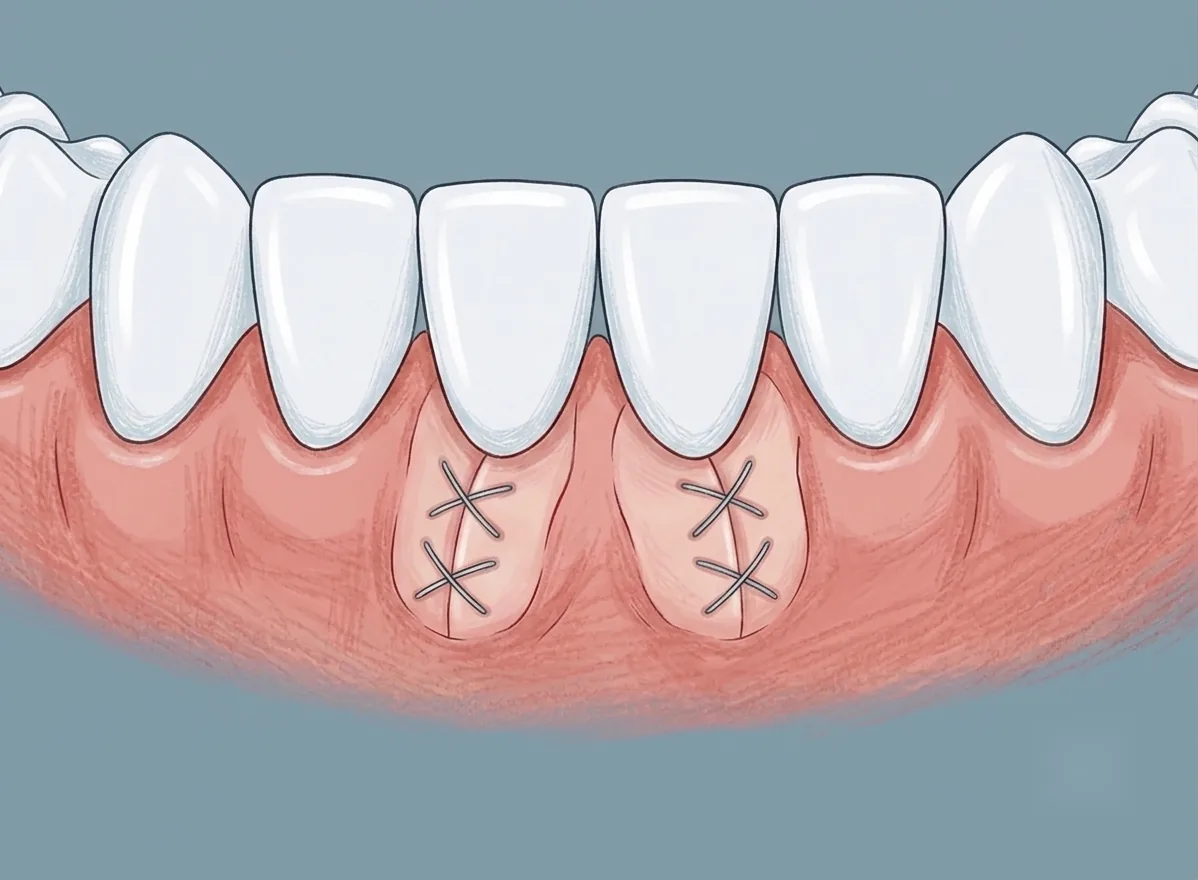
The final step holds everything steady so your gum can heal in its new position. The periodontist places fine sutures that secure both the graft and the overlying gum flap, keeping the tissue snug against the tooth and the bone so it does not shift while it knits together. These small stitches do the quiet work of healing, since a graft that stays still settles best. You will be given clear aftercare advice, such as eating soft foods, chewing on the other side, and keeping the area clean and undisturbed for the first week or two. Most patients find any soreness eases with simple painkillers. The team at Surekha Dental Clinic will check the area as it heals and remove the sutures once the graft has taken.
Frequently asked questions about gum grafting
Does gum grafting hurt?
No, gum grafting is not the painful experience many people fear. It is carried out under local anaesthetic, so both the gum and the palate are fully numb and you should feel little to no pain during the sitting, just gentle pressure. Most patients manage the days afterwards with simple painkillers and the aftercare advice we give you.
How long does it take to heal after a gum graft?
The graft usually settles over the first one to two weeks, with any tenderness easing within a few days. Full healing of the gum and the palate donor site takes a little longer. Eat soft foods, chew on the other side and keep the area clean, and the team will remove the sutures once the graft has taken.
How long do the results of gum grafting last?
A well-cared-for gum graft is designed to give lasting cover over the exposed root, and most patients keep the result for many years with good care. Gentle brushing, regular cleaning and routine check-ups at Surekha Dental Clinic all help protect it. Treating the cause of the recession, such as harsh brushing, helps the new gum line stay healthy.
Is gum grafting safe?
Yes, gum grafting is a well-established, routine periodontal procedure. At Surekha Dental Clinic it is performed by periodontist Dr. Aditi Jain, BDS, MDS under sterile conditions and local anaesthetic. Because the graft uses your own tissue, the body accepts it readily. Some mild soreness and swelling in the first few days is normal and settles with simple aftercare.
Who is a good candidate for gum grafting?
Gum grafting suits people whose gums have receded and left a tooth root exposed, which can cause sensitivity, root decay or a longer-looking tooth. It is also used to thicken thin, weak gum tissue. After a short examination, the periodontist will tell you whether a graft is the right option for your gums.
How much does gum grafting cost in Mumbai?
The cost of gum grafting depends on how many teeth are involved, the type and size of graft needed, and the condition of your gums. There is no fixed price. For a clear estimate, please call Surekha Dental Clinic on +91 98334 88847 or use the booking form. A written cost is provided after a short examination, with no obligation.