Emergency Dental Care in Mulund West

Medically reviewed by Dr. Aditi Jain, BDS, MDS · Periodontist & Oral Implantologist · with 15 years of experienceLast reviewed 9 June 2026

Emergency dental care is urgent treatment for sudden, severe tooth pain or a dental injury, where a dentist quickly finds the cause, relieves the pain and stabilises the tooth so it can be properly treated soon after. At Surekha Dental Clinic in Mulund West, Mumbai, emergency dental care is given as a priority when you walk in with a knocked, cracked or badly aching tooth, a lost filling or a sudden swelling. Our friendly team focuses first on settling your pain, usually under local anaesthetic, and then protecting the tooth until the full treatment can be carried out. Emergency dental care suits anyone facing an unexpected dental problem that cannot wait, including children and anxious patients, and most situations can be made comfortable in the first sitting itself.

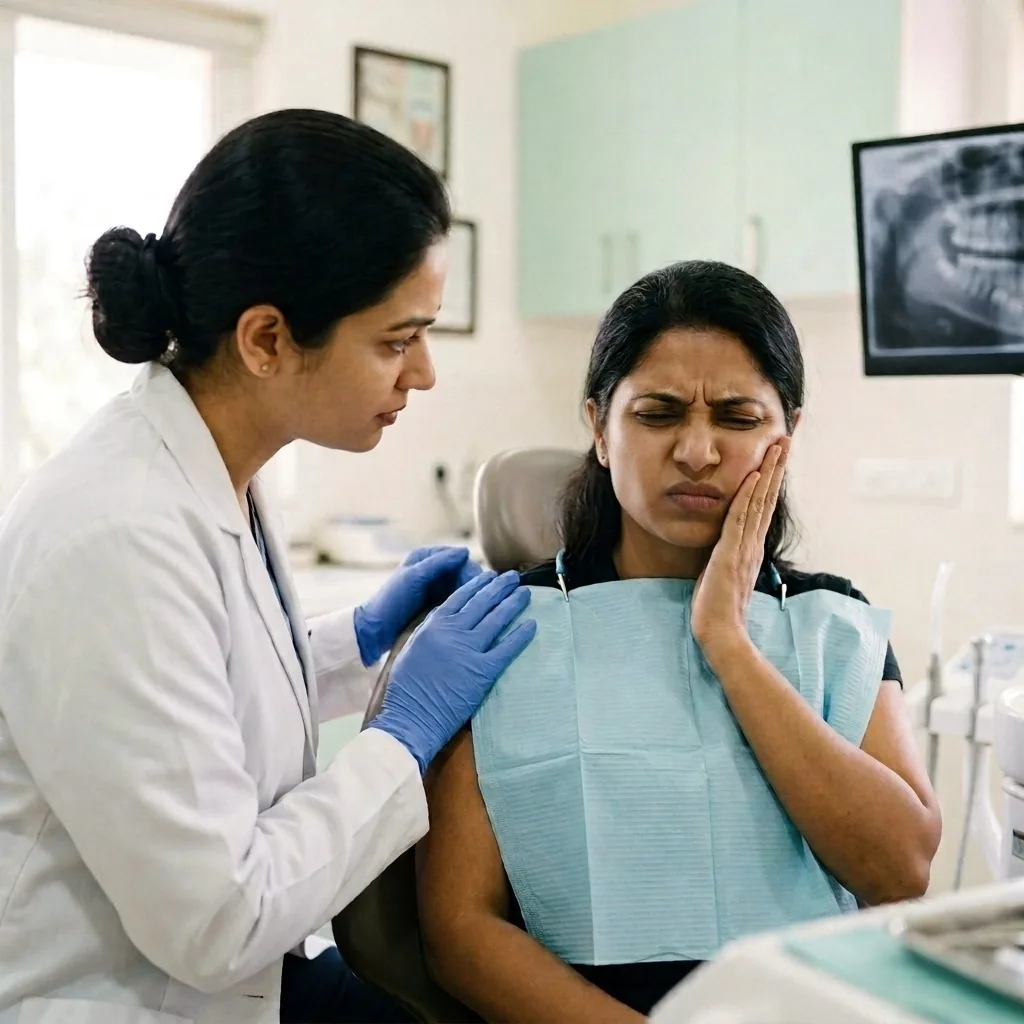
Woman holding her cheek in pain in the dental chair while the dentist leans in to help

When should you treat a dental problem as an emergency?

Some dental problems need same-day attention rather than waiting for a routine appointment. Contact a dentist promptly at Surekha Dental Clinic if you notice any of the following.

  • Severe, constant toothache that stops you eating, sleeping or concentrating
  • A tooth that has been knocked out, pushed out of position or is loose after a fall or blow
  • A cracked, chipped or broken tooth, especially with sharp pain or a jagged edge
  • Rapidly spreading swelling in the gum, cheek or jaw, sometimes with a bad taste or fever
  • Heavy or non-stop bleeding from the mouth after an injury or an extraction
  • A lost filling or crown (cap) that leaves a sharp or painful tooth exposed

Step by step

Here is exactly what happens during your emergency dental care, step by step.

1Step 1 of 3

How does the dentist find what is causing the emergency?

Emergency dental care at Surekha Dental Clinic begins with quickly working out exactly what is wrong, so you are not left waiting in pain. The dentist carries out a fast visual exam using a small mouth mirror and gently checks the area around the sore or injured tooth to pinpoint where the pain or damage is coming from. If the trouble may be hidden inside the tooth or below the gum, a small focused X-ray (a periapical X-ray) of that single tooth is taken to see the root and surrounding bone. This rapid assessment means the cause is identified accurately rather than guessed, so the right relief and treatment can begin straight away. Once the dentist knows what is happening, the next step is settling your pain.

2Step 2 of 3

How is the pain relieved quickly during an emergency?

Once the dentist knows the cause, the priority is making you comfortable as fast as possible. A small injection of local anaesthetic is given near the affected tooth, which blocks the nerve signals from that area so the sharp, throbbing pain settles within a few minutes. You should feel little to no pain after this, with most people only noticing their lip or cheek feeling a little heavy. With the area numb, the dentist can begin the definitive treatment in the same sitting, so you should feel only mild pressure. This is the step that brings the immediate relief most people come in hoping for, turning an urgent, distressing problem into something calm and manageable. Comfortable again, you are ready for the tooth to be protected.

3Step 3 of 3

How is the tooth protected until the full treatment?

With your pain settled, the final step is to seal and steady the tooth so it stays safe until the complete treatment can be done. Depending on the problem, the dentist places a temporary filling in any open cavity, a splint to hold a loose or knocked tooth gently in place, or a temporary restoration over a fractured area. This protects the exposed inner tooth from bacteria, food and further damage, and stops a wobbly tooth from moving while it begins to settle. The result is a tooth that is comfortable, secured and shielded, buying time for the proper repair, such as a filling, crown (cap) or root canal, at your follow-up sitting. Our team will explain exactly what your tooth needs next before you leave.

Frequently asked questions about emergency dental care

What counts as a dental emergency?

A dental emergency is any sudden problem needing urgent care, such as severe toothache, a knocked-out or loosened tooth, a cracked or broken tooth, heavy bleeding, fast-spreading swelling, or a lost filling or crown that leaves a painful tooth exposed. If it cannot comfortably wait, treat it as an emergency.

How quickly can I be seen for a dental emergency?

Surekha Dental Clinic in Mulund West prioritises genuine emergencies and aims to see you the same day wherever possible. Please call +91 98334 88847 first so the team can prepare for your arrival and, if needed, give simple advice to manage the problem until you reach the clinic.

Will emergency dental treatment hurt?

No, the aim is the opposite. Once the dentist has found the cause, a local anaesthetic is given near the tooth, so you should feel little to no pain, just mild pressure. Relieving your pain quickly is the main goal of the emergency sitting, not adding to it.

What should I do for a knocked-out or broken tooth before reaching the clinic?

For a knocked-out adult tooth, hold it by the crown, not the root, and keep it in milk or inside your cheek. For a broken tooth, save any pieces and rinse gently with warm water. Avoid the area, then call Surekha Dental Clinic straight away for guidance.

How much does emergency dental care cost?

The cost depends on the type of emergency, which tooth is involved, whether an X-ray is needed, and the treatment required to stabilise and later repair it. For a clear estimate, please call +91 98334 88847 or use the booking form. A written cost is provided after a short examination, with no obligation to proceed.

Is the emergency treatment the final fix for my tooth?

Emergency dental care is usually the first stage, not the final fix. It relieves your pain and stabilises the tooth so it is safe, but most teeth then need definitive treatment, such as a filling, crown (cap) or root canal, at a follow-up sitting. The team will explain exactly what your tooth needs next.
Book your emergency dental care in Mulund West

Dealing with tooth pain or have questions? Our friendly team at Surekha Dental Clinic will examine your tooth and walk you through your options.

Book a consultation