Medically reviewed by Dr. Aditi Jain, BDS, MDS · Periodontist & Oral Implantologist · with 15 years of experience·Last reviewed 11 June 2026
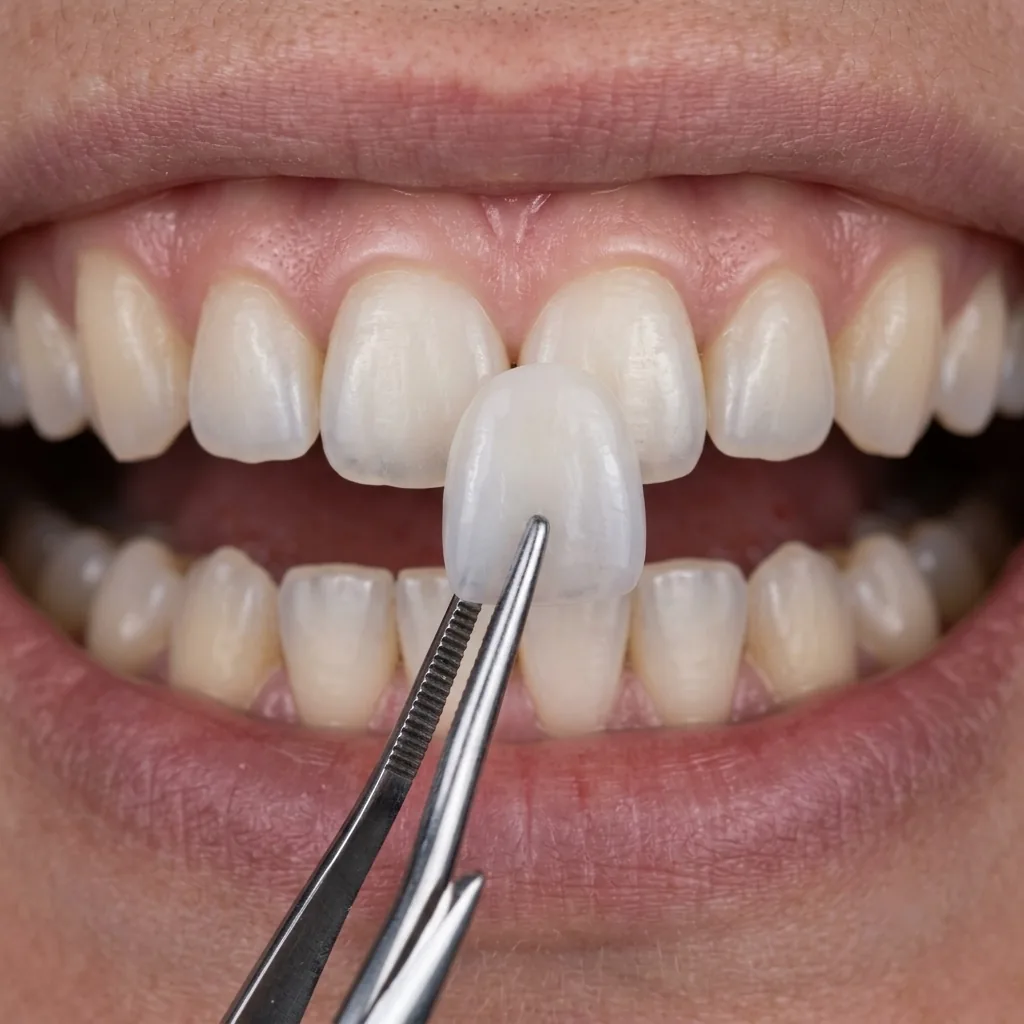
Dental veneers are thin, custom-made ceramic shells bonded onto the front of your teeth to change their colour, shape or alignment and refresh the way your smile looks. At Surekha Dental Clinic in Mulund West, Mumbai, veneers are planned around your face and the specific things you want to change, so the aim is a smile that still looks like you, only fresher. They suit people who are unhappy with chipped, worn, stained or slightly uneven front teeth and want a bigger change than whitening alone can give. Because a slim layer of enamel is usually reshaped, veneers are a considered choice rather than a quick fix, and we will talk through whether they are right for you before anything is done. If you have been thinking about your smile, our friendly team is happy to help you weigh up your options.
Veneers are an elective cosmetic treatment, so it is worth thinking about whether they fit your teeth and your goals. They tend to suit you well if the following sound familiar.
You have chipped, worn or slightly uneven front teeth that you would like to even out
You have stains or discolouration that whitening on its own does not fully improve
You have small gaps or minor crowding at the front that you would rather not straighten with braces
You are happy for a slim layer of enamel to be reshaped, as this part of the treatment cannot be undone
Your gums and the teeth being treated are healthy, with any decay or gum problems sorted out first
You grind or clench your teeth only mildly, or are willing to wear a night guard to protect the veneers
Step by step
Here is exactly what happens during your dental veneers, step by step.
1Step 1 of 4
How is the tooth prepared for a veneer?
Your veneer treatment begins by gently making a little room on the front of the tooth so the new shell sits flush and looks natural rather than bulky. The dentist uses a slim diamond bur to reshape a very thin layer of enamel, usually less than a millimetre, from the front surface of the tooth. Because this layer is so fine, many people need only a touch of local anaesthetic, and some do not need any. You should feel mild pressure and a little vibration, nothing sharp. This reshaping is what lets the ceramic veneer blend smoothly with the teeth around it. It is also the one part of treatment that cannot be reversed, which is why the dentist plans it carefully and explains everything before starting.
2Step 2 of 4
How is the veneer made to fit your tooth?
Once the tooth is shaped, the next job is to capture its exact form so the laboratory can craft a veneer that fits only that tooth. The dentist records the prepared tooth with a small scanner wand or a soft impression tray, along with the shade of the neighbouring teeth so the laboratory can match the colour closely. This record goes to a dental laboratory, where a skilled technician builds your thin ceramic veneer over the following days. In the meantime a temporary veneer is often placed to keep the tooth comfortable and looking presentable. Taking this time in the lab is what gives the veneer its lifelike translucency and strength. When it is ready, you come back for a second sitting to have it fitted.
3Step 3 of 4
How is the veneer tried on and the tooth made ready?
At your second sitting the dentist first tries the new veneer in place, without fixing it, so you can both check it together before it is bonded. The veneer is held against the tooth to confirm the fit at the edges and the gum line, and the shade is compared with your other teeth in good light. This is the moment to mention anything you are unsure about, because small adjustments are still easy to make. Once you are happy, the front of the tooth is cleaned, an etching gel is applied for a short time to create a slightly rough surface, and a thin bonding adhesive is painted on. This careful preparation helps the veneer grip firmly when it is set in place.
4Step 4 of 4
How is the veneer bonded onto the tooth?
The final step fixes the veneer to the tooth so it becomes a stable, natural-looking part of your smile. A layer of bonding cement is placed inside the veneer, which is then pressed firmly and accurately onto the prepared front of the tooth. While the dentist holds it in position, a curing light is shone over it for a short time to harden the cement and lock the veneer in place. Any cement that has squeezed out at the edges is removed, and the edges are polished smooth so they feel comfortable to your tongue and stay easy to clean. The dentist then checks how the veneer meets your other teeth when you bite. A well-cared-for veneer typically lasts ten to fifteen years.
Frequently asked questions about dental veneers
Do dental veneers hurt?
No, having veneers fitted is usually a comfortable experience. Only a thin layer of enamel is reshaped, so many people need just a little local anaesthetic and some need none. You may feel mild pressure during preparation, and the tooth can be a little sensitive for a few days afterwards, which usually settles on its own.
How long does getting veneers take?
Veneers are usually spread over two sittings. At the first the tooth is prepared and an impression is taken, then the laboratory makes your veneer over the following days while you wear a temporary. At the second sitting the finished veneer is bonded on. The dentist will give you a clear timeline after examining your teeth.
How long do dental veneers last?
A well-cared-for veneer typically lasts ten to fifteen years before it may need replacing. How long yours last depends on your bite and how well you look after them. Avoid biting very hard objects, wear a night guard at night if you grind, and keep up your regular check-ups.
How much do dental veneers cost in Mumbai?
The cost depends on how many teeth are being treated, the type of ceramic chosen, and whether any other work is needed first. There is no single fixed price. Please call Surekha Dental Clinic on +91 98334 88847 or use the booking form, and a written cost is provided after a short examination, with no obligation to proceed.
Will my veneers look natural?
Veneers are designed to look like your own teeth, made from translucent ceramic and colour-matched to the teeth beside them. We plan the shape and shade around your face so the result suits you rather than looking artificial. We cannot promise an exact shade, so each veneer is checked with you before it is bonded.
Can the enamel that is removed grow back?
No, the thin layer of enamel that is reshaped does not grow back, so veneers are a considered choice rather than a reversible one. This is why the dentist plans the preparation carefully and discusses it with you first. Once a tooth has been prepared, it will continue to need a veneer or a similar covering to protect it.